


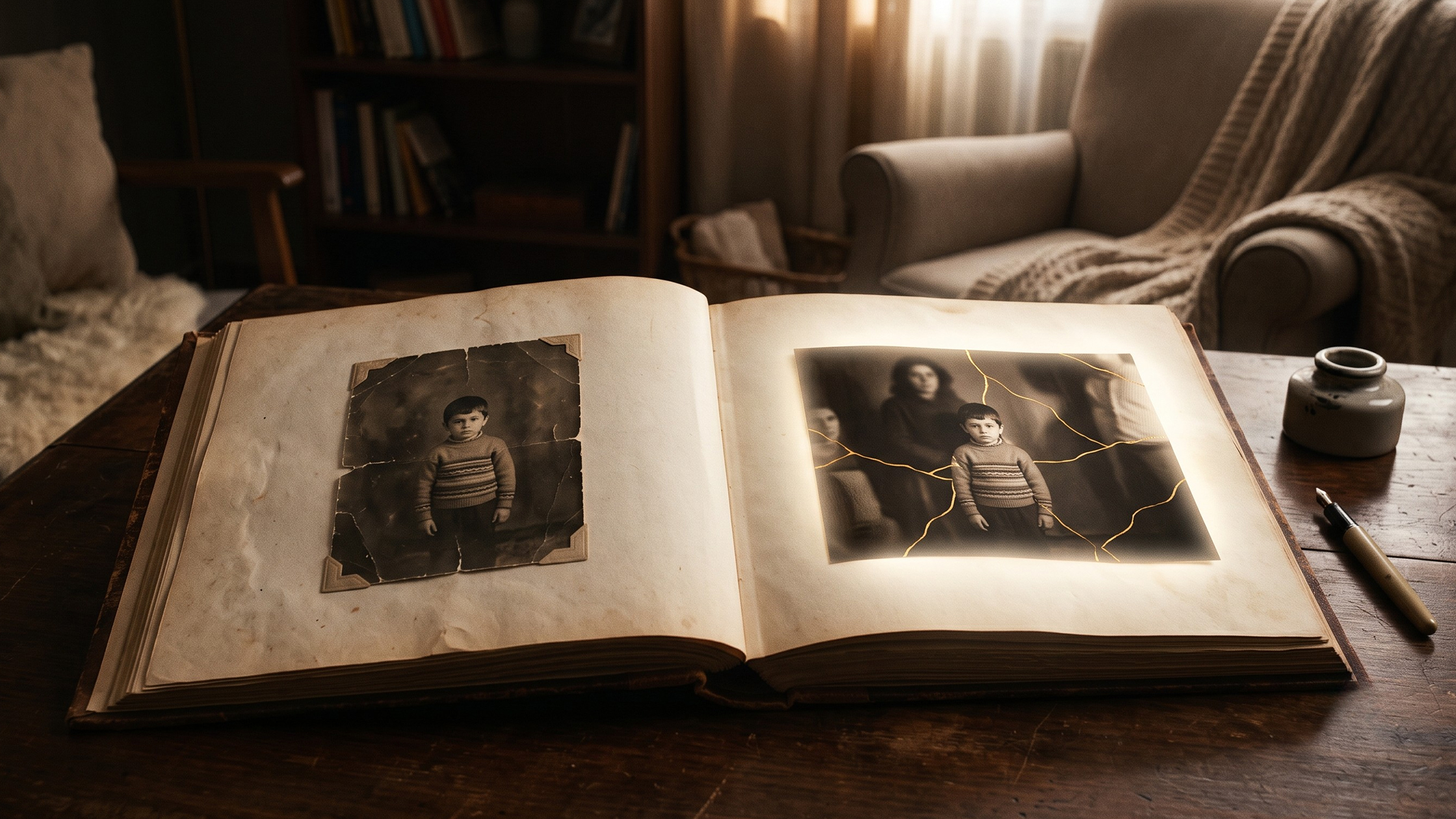
The Stories We Keep, The Truths We Grow Into
Sometimes healing is not about discovering new truths, but seeing old stories differently.
We often think healing begins when hidden truths finally come to light. But in therapy, healing rarely arrives through dramatic revelations alone. More often, it begins when we become emotionally ready to revisit familiar stories with new eyes.
Families do not only pass down memories; they also pass down narratives. These shared stories help family members make sense of difficult experiences, regulate anxiety, and maintain emotional stability. Most of these stories are not lies. They are often partial truths—stories shaped by what each person could emotionally understand at that time.
As children, we naturally interpret family experiences through limited emotional and cognitive resources. We create explanations that help us feel safer, more secure, and less overwhelmed. Families often do something similar collectively. Sometimes certain truths remain unspoken—not necessarily to deceive, but because the emotional weight feels too heavy to hold.
Psychologically, denial is often misunderstood as simple avoidance. While denial can become rigid and harmful, it can also serve a protective function. In some situations, not facing the full truth immediately may help us survive emotionally until we develop greater capacity to tolerate complexity.
This is why many family stories remain incomplete for years, sometimes decades.
The interesting part is that healing does not always require discovering entirely new facts. Often, the facts were there all along. What changes is our ability to hold them differently.
Therapy often brings people back to stories they have repeated about themselves for years: who they were in their family, what role they played, who was “strong,” who was “difficult,” who caused pain, and who needed protecting.
Over time, something shifts.
With emotional growth, increased safety, and greater self-awareness, people often begin to notice the missing parts of these stories. They may realise that what once looked like rejection may also have contained fear. What felt like emotional distance may have been unprocessed grief. What felt like abandonment may have been shaped by generational trauma, emotional limitations, or survival strategies.
This does not erase pain.
It simply allows more complexity.
And healing often lives inside that complexity.
One of the most powerful moments in therapy is when people stop asking, “Was my story wrong?” and start asking, “What parts of the story was I unable to see before?”
That shift matters.
Because healing is not always about replacing one story with another. Sometimes it is about expanding the story so it can hold more truth, more compassion, and more emotional nuance.
Perhaps that is why revisiting old narratives can feel both painful and freeing.
We are not always rewriting history.
Sometimes we are simply growing into the emotional capacity to understand it more fully.
Maybe healing is not discovering that our childhood story was false.
Maybe healing begins when we realise it was incomplete.
